
100 Pediatric Cataract Surgeries: What This Milestone Revealed
Spreeha Foundation has reached an important milestone in the final quarter of 2025: 100 children across Bangladesh have regained their sight through cataract surgery.
Each restored eye represents a child who can now see the blackboard, recognize loved ones, walk confidently, and imagine a different future. Yet this milestone also reveals something deeper — how lack of awareness, delayed diagnosis, and limited access to care allow preventable blindness to persist.
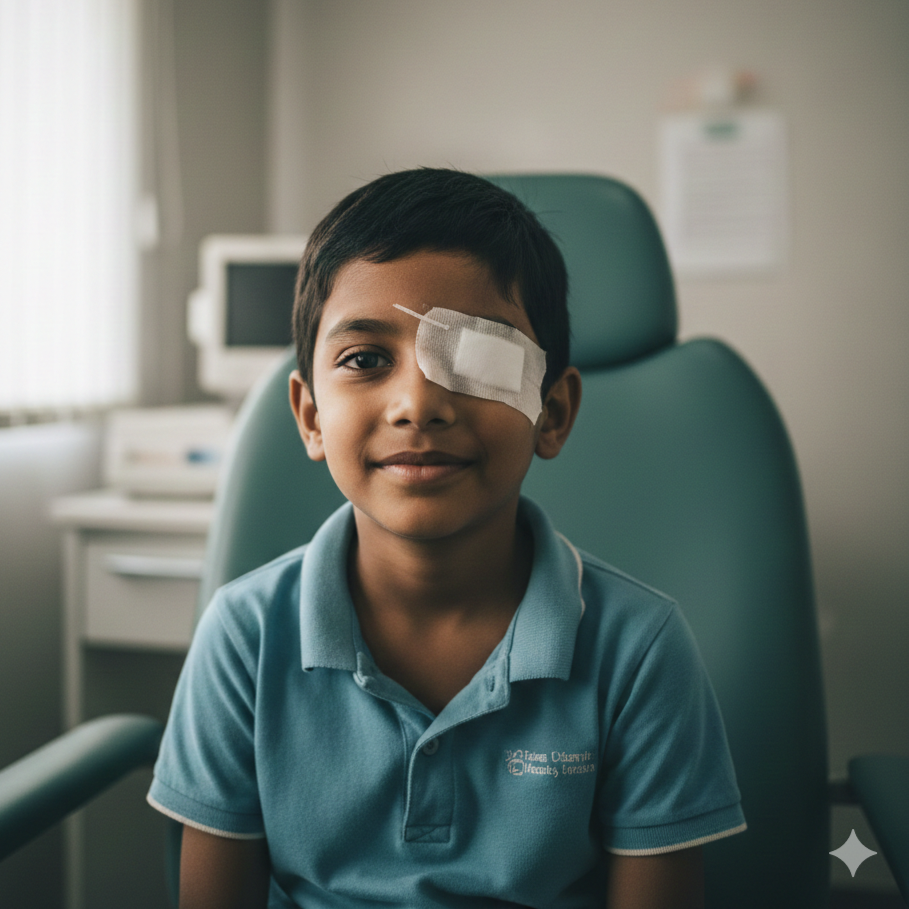
Image is AI-generated and does not depict a real child. Used to protect child privacy.
The Invisible Problem: When Treatable Blindness Steals Childhood
Many children in Bangladesh lose vision not because it cannot be treated, but because the problem is noticed too late. Childhood cataract accounts for nearly 15% of childhood blindness, yet awareness remains low. National surveys show that over 60% of parents do not realize that poor eyesight affects their child’s learning, resulting in delayed help-seeking.
Our own data echoes this reality.
Among the first 100 children treated through our program, the average age at surgery was nine — meaning they had already spent several crucial learning years without clear vision.
Before reaching care:
Only one in four could see well enough to read or follow lessons.
Nearly one in four could barely detect light or hand movement.
The rest lived with moderate visual impairment, limiting confidence, mobility, and school participation.
These numbers highlight a simple truth:
The challenge is not only cataract — it is late detection, low parental awareness, and the difficulty of reaching specialist care when it matters most.
Without early screening, counselling, and clear referral pathways, children lose years of developmental opportunity long before treatment begins.
Why These Regions — The Strategic Choice Behind the Pilot
Most children in this pilot came from families who could not afford specialist eye care. Cases clustered across five districts — Sylhet, Mymensingh, Chandpur, Dinajpur, and Rajshahi — and their surrounding rural belts.
We chose these regions intentionally because they have strong, trusted hospital partners able to perform safe, high-quality pediatric cataract surgeries — a requirement for this complex intervention.
The experience also showed something important:
When a reliable referral pathway exists, even children from remote areas can reach the care they need.
What Spreeha Tested: A Care Pathway, Not Just a Procedure
This pilot was not designed to prove that cataract surgery works — the medical community already knows it does.
Our goal was to test whether a complete care pathway could function effectively in regions where specialist services are limited and families often struggle to navigate treatment systems.
The pathway began in the community, where children were identified through screenings in schools, clinics, and partner organizations. Once diagnosed, we supported families through referral, counselling, and hospital navigation, ensuring no caregiver felt overwhelmed or uncertain.
At tertiary hospitals, our partners performed high-quality pediatric surgeries, providing skilled surgeons, safe intraocular lenses, and child-friendly anesthesia — care that would otherwise be out of financial reach for most families.
The journey did not end in the operating room.
Each child entered a 12-month rehabilitation phase, including:
postoperative care
refraction and amblyopia management
progressive improvement
regular follow-up visits
This aftercare is essential because a child’s brain must learn how to see. The pilot therefore allowed us to explore a critical question:
Can a coordinated continuum of care — from screening to surgery to recovery — be built for children living in low-resource settings?
The answer, reflected in early outcomes, is encouraging.
What the Data Shows: A Shift You Can See
By the time of analysis, 75 children had completed their second follow-up visit, providing a clear picture of early recovery.
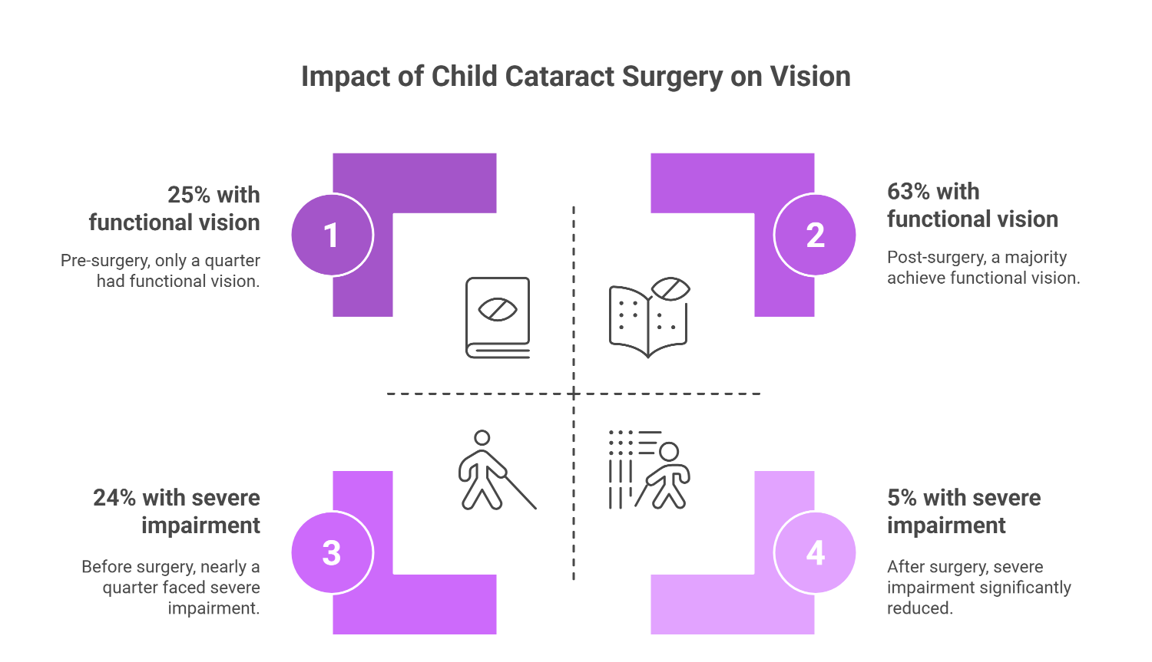
In simple terms:
Functional sight more than doubled — and blindness fell from almost one in four children to one in twenty.
This demonstrates that even when children arrive late, timely intervention, quality surgery, and structured follow-up can reverse a condition that otherwise leads to lifelong disability.
Who Reaches Care — and Who Risks Being Missed
The data also shows who is benefiting — and who may be left behind.
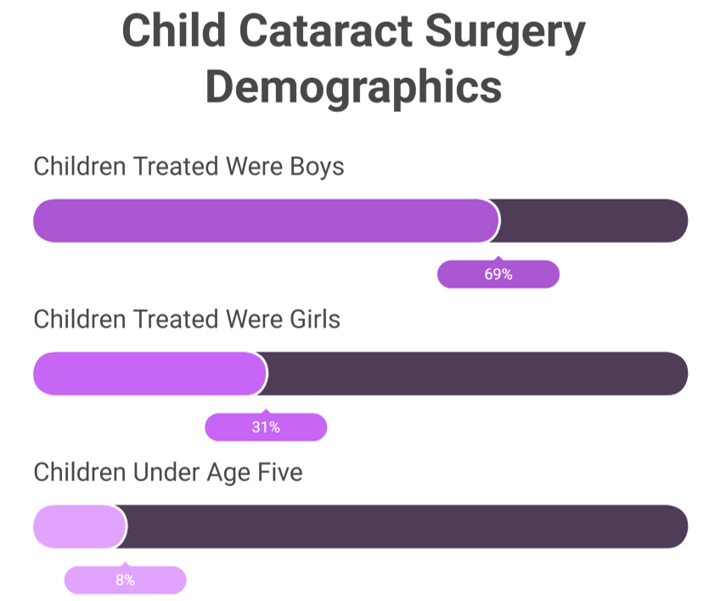
These gaps raise important questions:
Are girls being brought to care later — or not at all?
How can we reach children earlier, before vision loss affects development and learning?
For Spreeha, these insights serve as design signals — guiding how we strengthen outreach, parent education, and community engagement in the next phase.
Why This Milestone Matters Beyond the First 100
This milestone proves that:
Complex pediatric surgery becomes accessible when financial, referral, and care pathways are in place.
Timely intervention works, even for children who have lived with poor vision for years.
A structured follow-up model delivers real, measurable impact, not symbolic change.
As we move toward expanding quality vision care for more children, we are:
strengthening early screening in high-need districts.
addressing gender and age gaps.
refining this pathway into a scalable model that integrates with Spreeha’s broader urgent care efforts.
The journey from seeing only shadows to reading a textbook is not just a personal transformation. It is evidence that when healthcare becomes equitable and accessible, children’s futures are transformed.
** With funding support from the Jeco Foundation, Spreeha Foundation has designed and implemented this project in Bangladesh.
** The article is authored by Halima Tus Sadia, Head of Growth at Spreeha Foundation.