
From Access to Impact: 2025 in Review
In many parts of Bangladesh, access to timely and affordable healthcare remains uncertain. For millions of families, delays in care often turn manageable conditions into crises. Spreeha Foundation exists to change that reality by bringing trusted, community-anchored healthcare closer to where people live.
In 2025, that mission translated into scale, system strengthening, and measurable impact. This was not simply a year of expansion. It was a year of proving that tech-enabled, community-based urgent care can reduce financial burden, improve health-seeking behavior, and ease pressure on an overstretched health system.
“In 2025, Spreeha proved that community-anchored, tech-enabled urgent care can deliver real system-level change.”
Reaching Care at Scale—Without Losing Trust
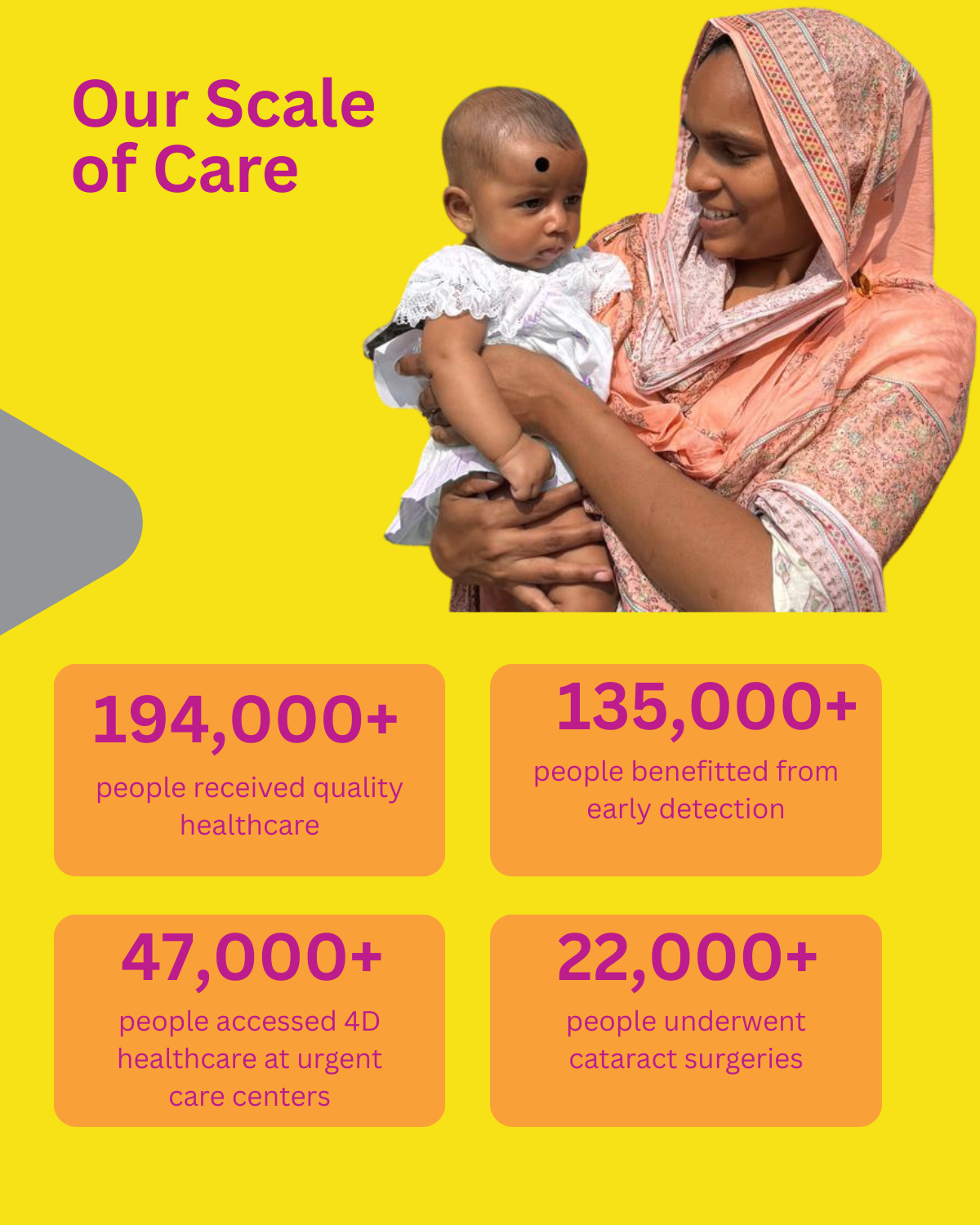
Over the year, Spreeha delivered care as a continuum, not a series of one-off services. Primary and urgent consultations, early detection, referrals, follow-up, and specialized care were designed to work together—so patients did not fall out of the system after the first visit.
Early detection remained a core priority. Identifying health risks early reduces treatment complexity, prevents avoidable complications, and lowers costs for families. By bringing screening closer to communities, Spreeha shifted care away from emergency response toward timely intervention.
This approach is anchored in Spreeha’s 4D Model of Care, which integrates Doctors, Drugs, Diagnostics, and Data at a single point of service. Patients receive coordinated care in one place, reducing fragmentation and eliminating the burden of navigating multiple providers.
“Healthcare should not begin at the emergency room. It should begin early, close to home, and with dignity.”
Alongside urgent and primary care, Spreeha’s eye health work continued to restore sight and independence. Cataract surgery is not only a medical intervention—it enables people to return to work, regain mobility, and re-engage with daily life.
Showing Up Where the Health System Often Doesn’t
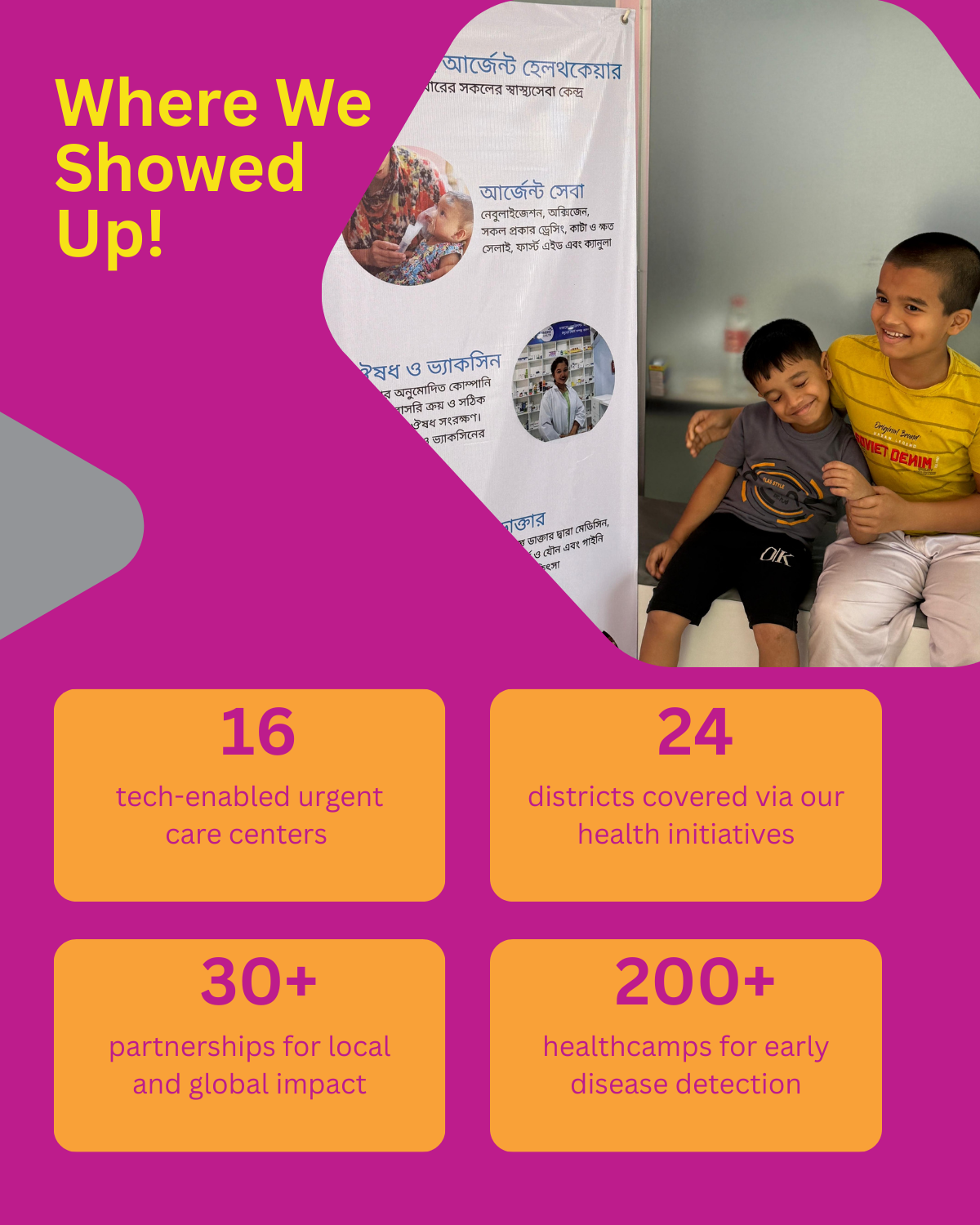
Impact is not only defined by how many people are reached, but by where care is available and how reliably it can be accessed.
In 2025, Spreeha strengthened a network of tech-enabled urgent care centers that function as trusted, community-based entry points to primary and urgent healthcare. These centers were supported by targeted outreach efforts, ensuring care extended beyond fixed facilities and reached people in their own communities.
Spreeha’s presence spanned urban, peri-urban, and rural contexts—linking community-level screening and care with reliable referral pathways and follow-up. Partnerships with hospitals, local organizations, and global collaborators strengthened service delivery, referral quality, and continuity of care.
This approach reflects a deliberate strategy: embed care within communities, reduce avoidable reliance on tertiary hospitals, and ensure people receive the right care at the right level, at the right time.
Beyond the Numbers: What Changed in Real Terms
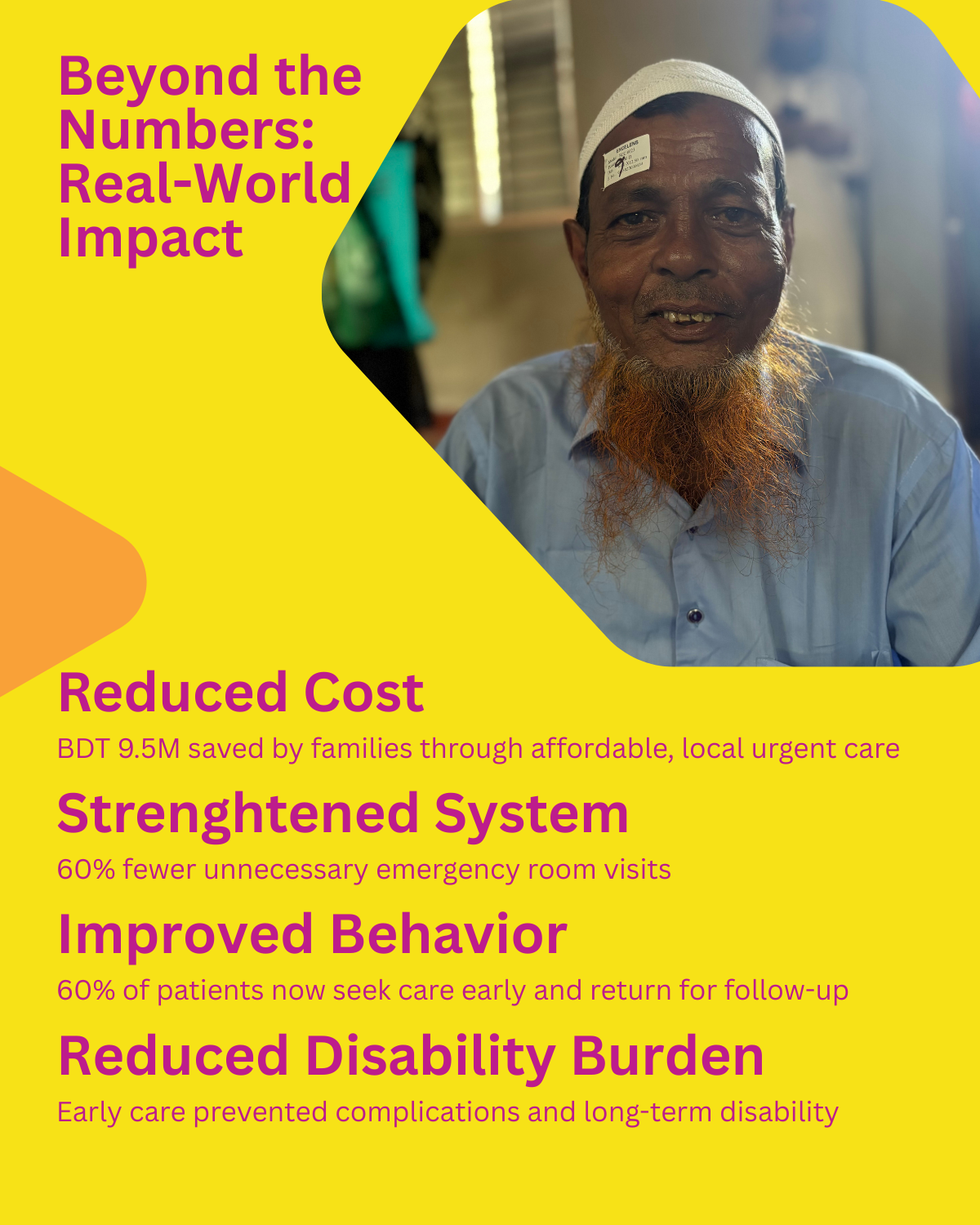
While service delivery figures provide important context, Spreeha’s work in 2025 was ultimately defined by what changed for families and for the health system. By delivering affordable urgent care closer to communities, Spreeha reduced the financial strain that often delays treatment and forces difficult household trade-offs. Families were able to seek care earlier, avoid unnecessary expenses, and move away from crisis-driven health decisions.
At the system level, treating patients at the appropriate point of care eased pressure on tertiary hospitals and improved patient flow across the health system. Just as importantly, care-seeking behavior began to shift: more people sought care early, returned for follow-up, and engaged with services beyond a single visit—signaling growing trust in primary and urgent care and a more sustainable approach to health.
Investing in Technology That Serves People
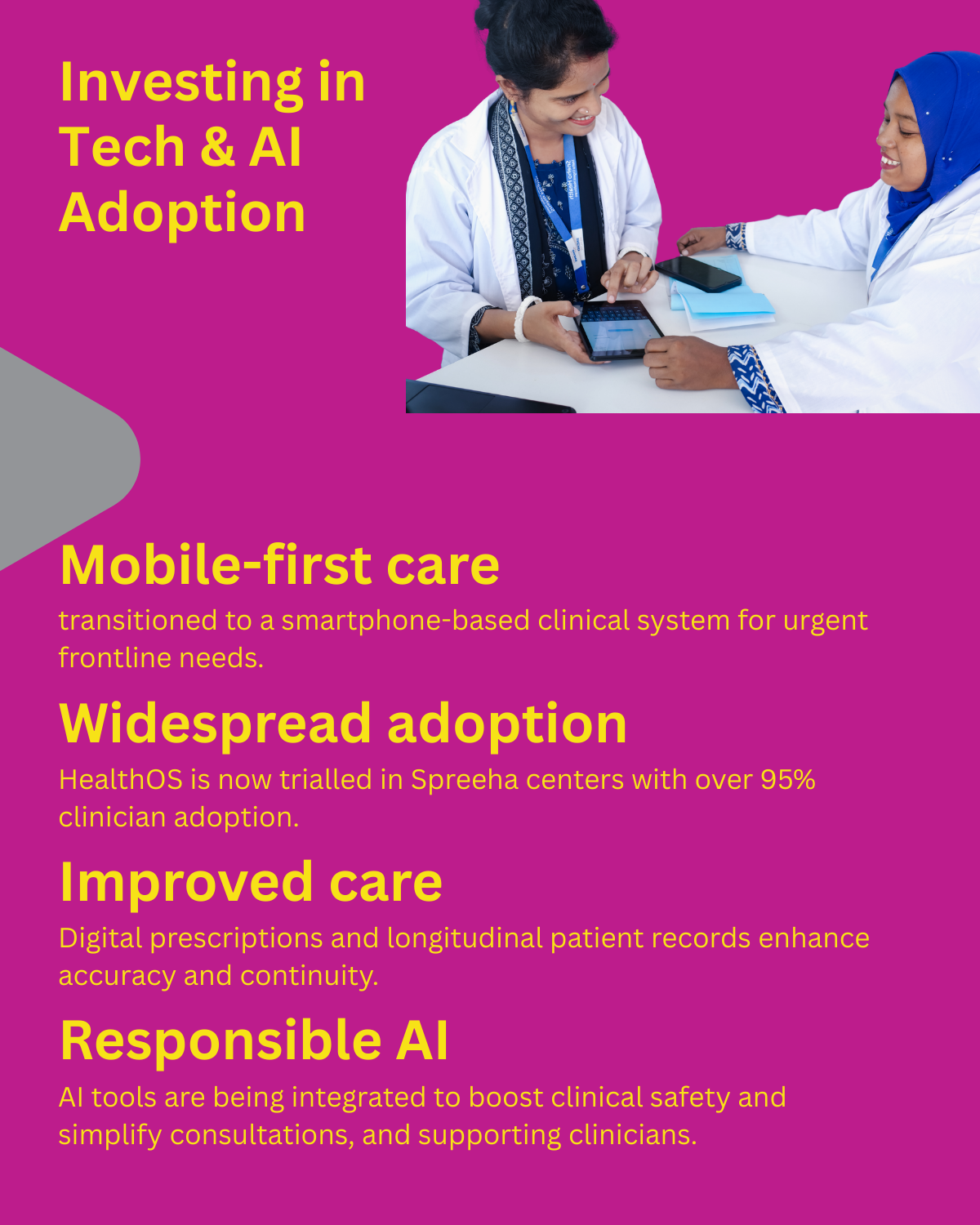
In 2025, Spreeha advanced its digital health journey with a clear focus on frontline realities. The shift to a mobile-first clinical system was designed for high-volume, resource-constrained settings, ensuring technology fit naturally into daily clinical workflows rather than adding friction. Digital tools strengthened prescription clarity, enabled longitudinal patient records, and improved continuity of care across visits.
Building on this foundation, Spreeha began integrating responsible AI tools to support clinical safety and simplify consultations—always with clinicians at the center. These tools are designed to augment judgment, not replace it, reinforcing the belief that technology delivers the greatest value when it strengthens human care rather than competing with it.
“Technology works best in healthcare when it strengthens clinicians—rather than replacing them.”
Looking Ahead: From Proof to Scale
These outcomes now anchor Spreeha’s 2026–2028 strategy. The focus ahead is clear:
Scale from 16 to 100 tech-enabled urgent care centers across Bangladesh
Prepare for expansion into African markets facing similar access challenges
The model has been tested, refined, and validated. The next phase is deliberate scale.
We are deeply grateful to our early partners whose trust helped prove that this approach works. As we move into 2026, Spreeha is seeking strategic partnerships with institutional funders and donor agencies committed to investing in proven, system-strengthening healthcare solutions.
Together, we can build healthcare that lasts.