

From Aid to Agency: 4 Lessons from the World Health Summit Regional Meeting 2026
Author: Smriti Shrestha, Director of Development and Partnerships, Spreeha Foundation
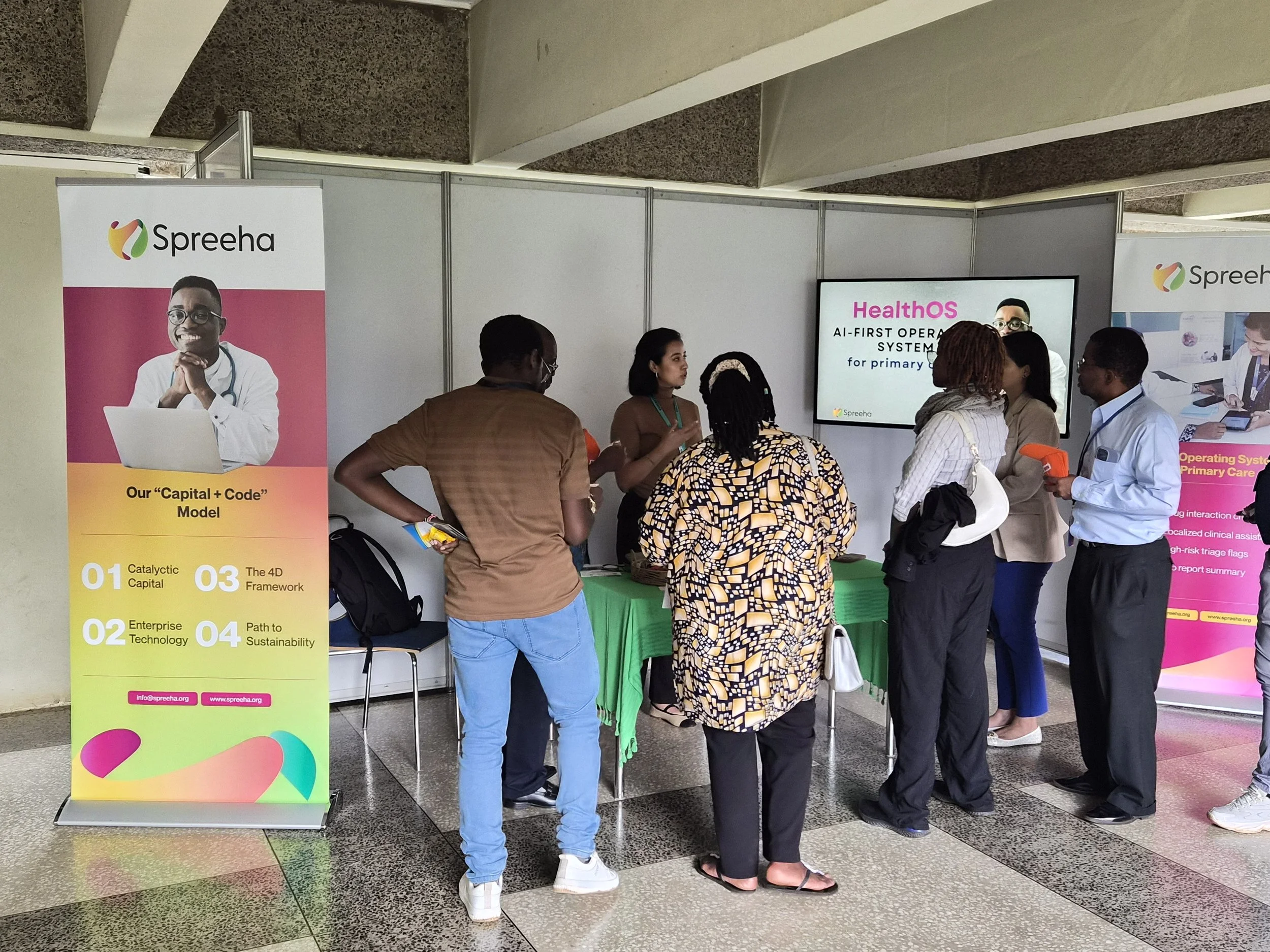
In conversation with the meeting attendees at Spreeha booth @WHS regional meeting
The global health landscape is reaching a massive shifting point. Traditional global health aid is declining rapidly– forecast to plunge up to 60% from its 2022 peak, according to recent projections. Yet, rather than slowing progress, this shift is catalyzing a deeper transformation – one where countries, particularly across Africa, are taking ownership of their health systems and advancing toward sovereign, locally driven models.
I recently represented Spreeha at the World Health Summit Regional Meeting 2026 in Nairobi, Kenya, alongside our Board Chair, Michael Tjalve, PhD. Hosted by Aga Khan University alongside the WHO, Africa CDC, and the Kenyan Ministry of Health, the energy was electric. Over 3,000 leaders, innovators, and changemakers from 80+ countries filled the rooms.
These macro shifts were echoed in the detailed discussions we engaged in throughout the summit. As we scale our digital health platform, HealthOS, in Kenya, the discussions strongly reinforced several principles that underpin our work: community-centered design, respect for data sovereignty, and solutions built for real-world frontline conditions.
Below are four key insights from the summit that are directly shaping our approach.
1. Bridging the Local Artificial Intelligence (AI) Gap
One phrase from the panels stayed with me: “AI in Africa knows very little about Africa.”
Too often, developers train advanced health technologies on data sets from Western clinical environments. This creates a significant gap in context-aware, localized clinical AI. If we want digital health to work here, we must treat AI as a public good- built on local data, and designed for regional health profiles. This local-first approach is precisely why we built HealthOS, and it remains the foundation of every program decision we make.
2. Data Must Follow the Patient
Fragmented health journeys break continuity of care. Patients rarely visit just one facility, and we cannot expect them to perfectly recall complex medical histories across multiple consultations.
True data sovereignty requires data mobility across the entire care continuum. We must design health systems so that vital records securely follow the patient— from a community health worker to a primary care clinic, and up to regional hospitals. Health systems must break down data silos and connect care across every level of the system.
3. People Determine Success – Not Technology
A technically flawless platform fails the moment it bogs down an already strained healthcare worker. Frontline health workers, nurses, and clinical administrators ultimately determine whether a digital intervention succeeds or is abandoned.
Usability, intuitive design, and continuous training matter just as much as the underlying code. We must focus relentlessly on reducing the cognitive load for providers so they can keep their focus exactly where it belongs: on the patient.
4. Designing for the Realities of Primary Health Care
Most vulnerable populations do not live inside health facilities; they live in communities, often navigating chronic conditions silently. Strengthening the primary health care systems is the most impactful investment a nation can make, boasting a proven 10:1 return oninvestment in economic productivity and improved health outcomes, as documented by the WHO and the Primary Health Care Performance Initiative.
To unlock this impact, we must map digital solutions to real patient journeys. Most patients move through three to four consultations across different tiers of care – not a single, straightforward clinic visit. Our tools must reflect and support that reality.
Looking Ahead: Our Commitment in Kenya
Kenya is rapidly advancing its digital ecosystem. With active debates around the Artificial Intelligence Bill 2026 and the upcoming National AI and Emerging Technologies Policy, the country is rightly aligning innovation with strict data protection and localized governance.
As we expand in East Africa, our role is not to act as a foreign technology provider. Instead, we are engaging as long-term collaborators – participating in country-led learning networks, partnering with local health authorities, and co-building solutions that are grounded in local realities.
The future of global health lies in moving from patronage to equitable partnership. We see ourselves as part of a broader ecosystem—working alongside governments, providers, and communities to build resilient, locally owned health systems that can scale sustainably.
Want to learn more about how HealthOS is driving this transformation or explore partnership opportunities with us in East Africa?
Connect with Smriti Shrestha on LinkedIn or reach out to our development team to continue the conversation at info@spreeha.org