

What Came Back into Focus After 50,000+ Cataract Surgeries?
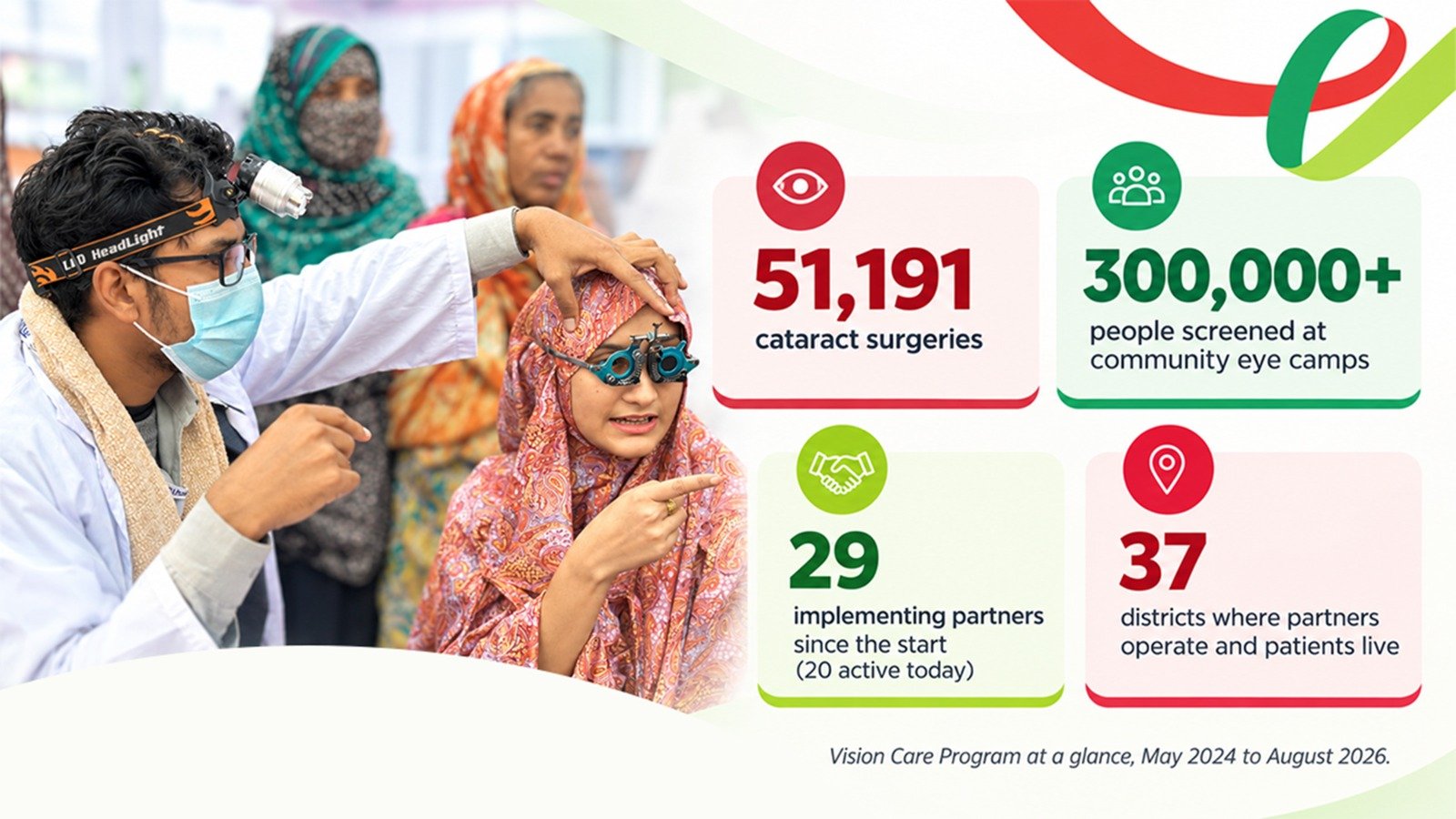
A familiar face. A road home. Work waiting to be finished. These may feel like ordinary parts of life. But when sight begins to disappear, the ordinary can gradually move out of reach. Restored sight can mean recognizing a loved one, returning to work, moving independently, managing a household and planning for tomorrow again. Behind Spreeha's 51,191 cataract surgeries are tens of thousands of individual moments like these. Different people returned to different lives, but every result began by connecting someone to the right care at the right time.
For nearly ten years, Mohi Uddin did not see a doctor about his eyes. He pulled a rickshaw in Cox's Bazar, a job that depends on reading narrow alleys, oncoming traffic and passengers waving from the roadside, and a dense cataract slowly took all of that from him. Poverty kept him from a single eye examination at that time. His young son took over the work of feeding an eight-member household, which includes Mohi Uddin's daughter with a disability.
"When a rickshaw puller loses his eyes, he loses his road," Mohi Uddin told us.
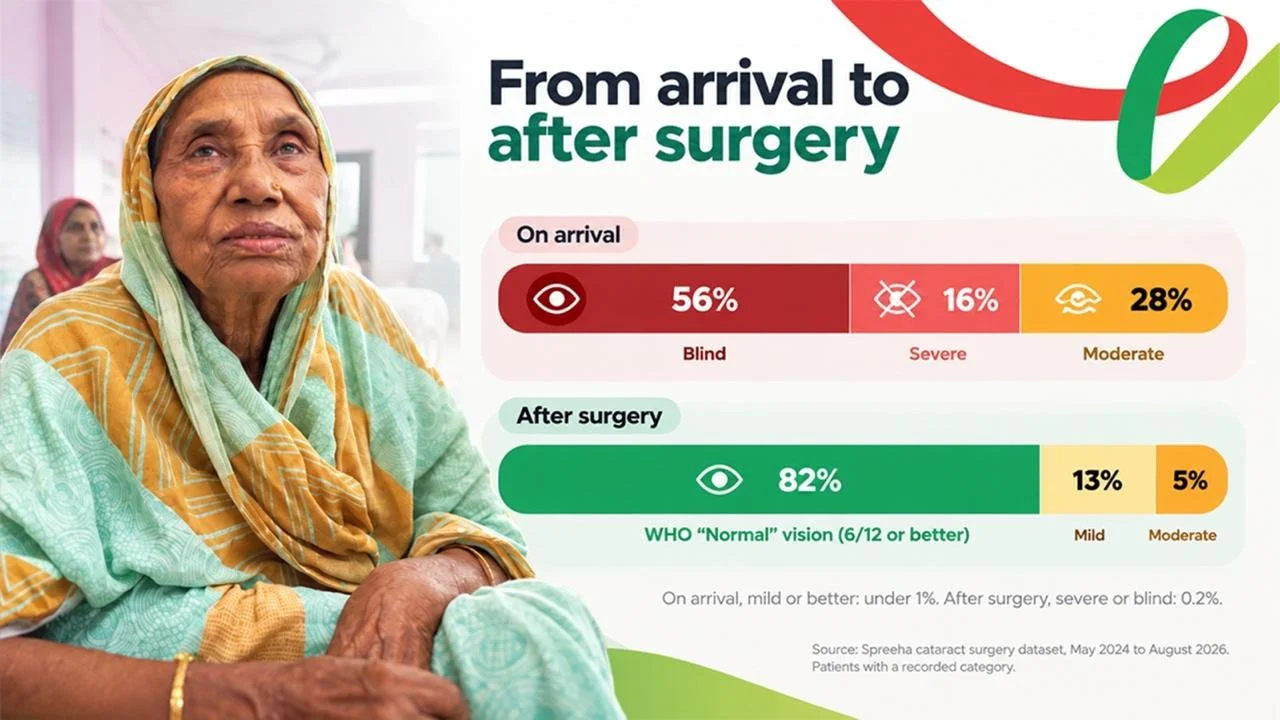
Mohi Uddin waited nearly ten years. That is longer than most, but late arrival is the norm. Of the patients we treat, 56% are already blind by the WHO definition when they reach us.
The operation that would have fixed it takes about fifteen minutes.
What the surgeries gave back
A familiar face.
Achiya Khatun, from Begumpur in Gazipur, has lived alone since her husband died twelve years ago. Her children no longer support her, and only her granddaughter, Chayti, visits. Cataracts began clouding Achiya's sight thirteen years ago, and her biggest regret was not being able to truly see her grand-daughter grow up. When an eye camp came to her area, Chayti took her for the check-up. After surgery in one eye, Achiya could see her granddaughter's face clearly for the first time in years.
"When they opened my bandage, I forgot all my sorrows at that moment," she said. "I felt happy after a very long time."
A road home.
Abul Hosen, a driver by profession, lost his job after a cataract began blurring his vision. For two years he was jobless. He could not judge distances, read road signs or drive after dusk, and he had no savings for surgery. He was screened through the program and had free surgery. Within days the blur lifted. The surgery gave him back his depth perception, and with it a way back to work. He is getting ready to drive again.
Work waiting to be finished.
Ranjit Das, makes and mends shoes from a footpath in Mymensingh, a trade that depends on telling leather colors apart and judging a sole by eye. Over nine years his sight faded until, by nightfall, it failed completely, and every evening he packed up his tools early and sat in the dark at home. After surgery and corrective eyewear, he is back at his workstation.
"After the surgery, I feel like I've gotten a new life," he said.
He now urges neighbors who are losing their sight to seek care without hesitation.
Planning for tomorrow.
Nasima Akhter took up domestic work, earning around 5,000 BDT a month, when her husband became unable to work. As a cataract blurred her right eye, cooking felt unsafe and she could no longer do the hand embroidery that was also part of her income. After free surgery, her sight cleared over the following days. Now she is looking ahead.
"There's no end to learning," she said. "I want to learn tailoring full time and start working from home, with dignity and independence."
In a household with no savings, losing sight is not only a medical event. The earning moves to someone else. Mohi Uddin's son took on eight people. Nasima gave up the embroidery that topped up her wage. Ranjit's working day ended at dusk.
What 51,191 surgeries add up to
The progress.
Our partner clinical team checked visual acuity of patients before and after the surgery.
98.86% of patients improved by two or more lines on the eye chart.
The gain is largest for patients who arrive blind. 28,563 of them have both tests on record. 82% reached what the WHO calls normal vision, 6/12 or better. 0.1% remained blind. On average, they gained more than six times as much vision as patients who arrived with mild vision loss.
The people and partners behind the journey.
Before surgery comes screening. Community eye camps are held in schoolyards and union parishad grounds. More than 300,000 people have been screened this way.
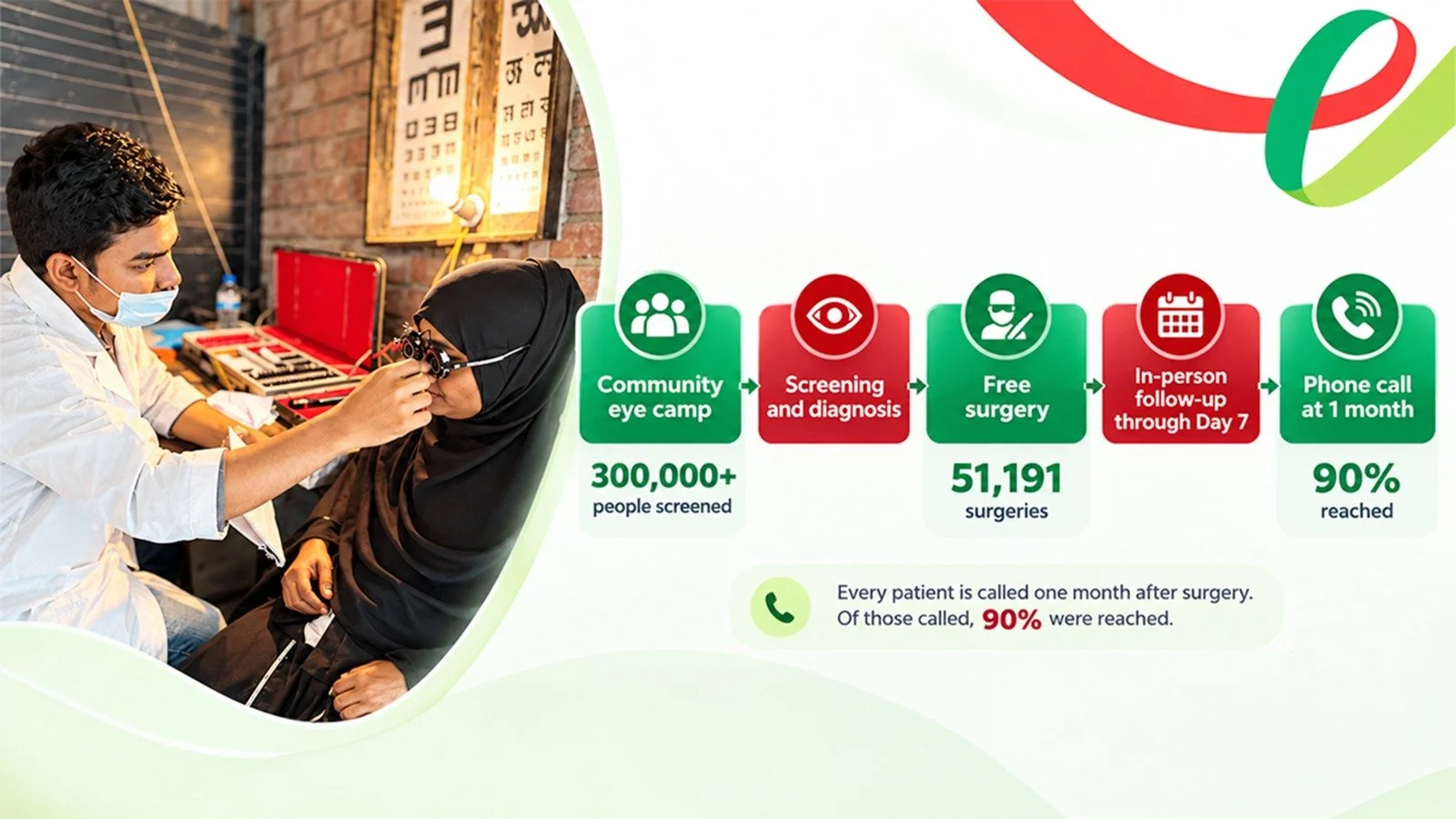
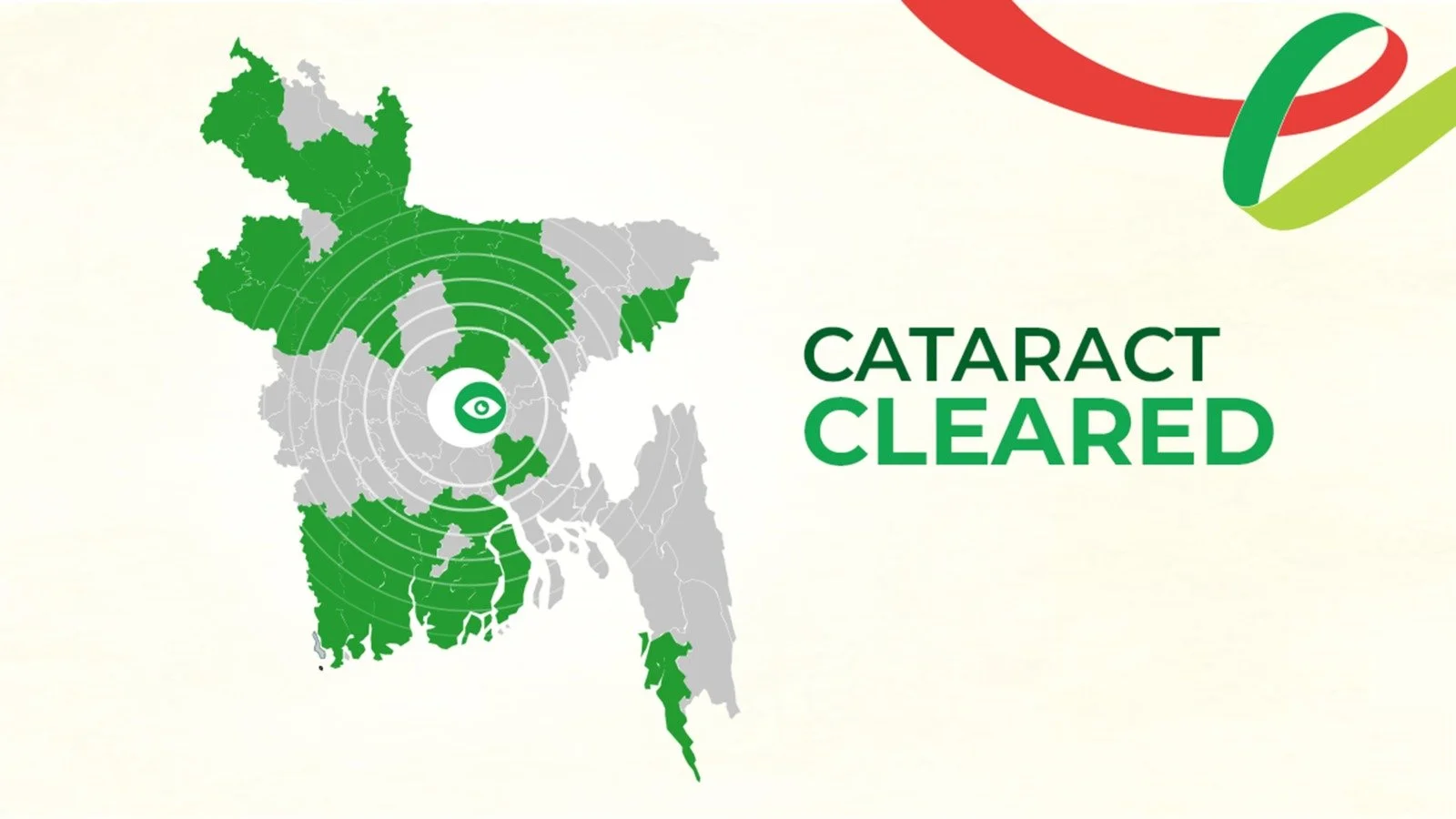
The surgeries are delivered through hospitals and clinics that already existed, rather than facilities built for the programme. Since May 2024, Spreeha and JECO Foundation have worked with 29 local implementing partners, 20 of them active today, across 37 districts.
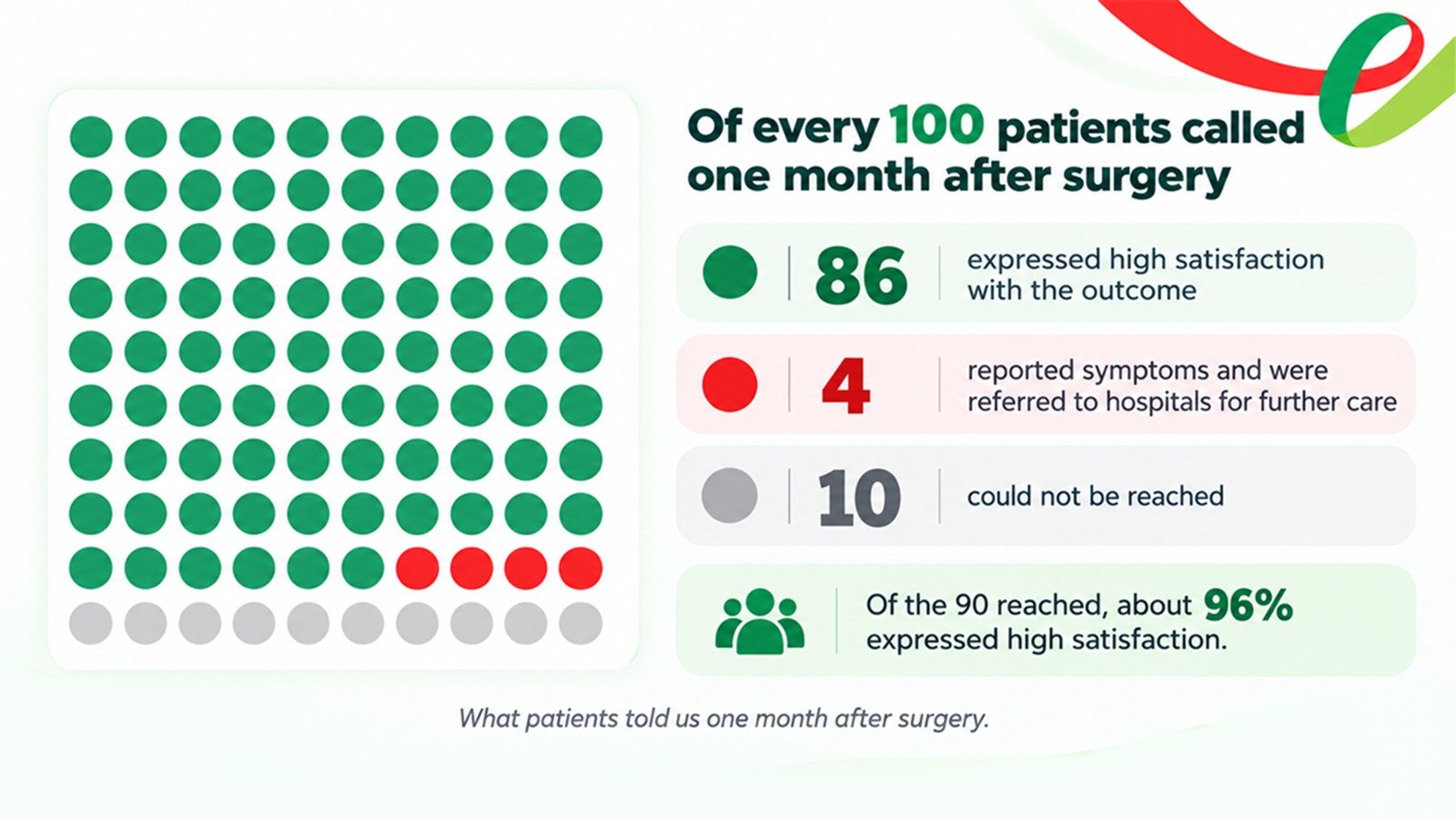
Patients return for in-person follow-up through Day 7, and are told to come back sooner if anything goes wrong. One month after surgery we call every patient. We reached 90%. Of those, 96% reported high satisfaction with the outcome. 4% reported symptoms and were referred to hospital for further investigation and treatment.
What keeps people waiting.
Md. Sohel Rana has spent eleven years in operating theatres as a mid-level ophthalmic professional. One patient has stayed with him. The man arrived with hypermature cataracts in both eyes and could sense light and nothing more. He had come to see himself as a burden, dependent on everyone around him, with nothing left to do.
The next morning, the bandages came off.
“I could literally see happiness in his eyes,” Sohel says. Seven days later, at the follow-up, the man looked confident again.
We asked Sohel what keeps people from surgery for so long. We expected him to say money.
He said fear.
“Many people are terrified of surgery and the unknown. They are afraid of what will happen after the surgery, who will take care of the family if their eyesight is not back.”
Money came second. Distance came third.
That fear is about the family. If the surgery fails, who earns? Who cooks? A person who already depends on others is being asked to risk depending on them more.
That changes what a camp has to be. It has to come to where people already are, close enough to walk to. And it has to cost nothing, not only the surgery. The programme covers transport, food during the two nights in hospital, the medicines afterwards and the protective spectacles.
It also has to be a place where being frightened is normal. People can ask in their own dialect, and ask again, and nobody moves them along. The doctor explains what the operation involves, what the day will feel like, and what happens if they decide to wait. The family is part of that conversation, because in most households the decision is not the patient's alone. The cost to the family is explained before anyone is asked to decide. There is none.
The next person waiting
Every one of the 51,191 waited first. Some for a year. Some for a decade. The operation takes about fifteen minutes. The waiting is what costs people their work, their independence, and the faces of the people they love.
Somewhere there is another Achiya who has not properly seen her granddaughter in years. Another Ranjit packing up his tools before dark. Another Mohi Uddin whose son is carrying the household. Another Nasima with plans she cannot start.
For all of us at Spreeha and at our partner organizations, the work moving forward is clear: to keep closing the gap between the onset of darkness and the 15 minutes that bring back the light.
Spreeha with support from JECO Foundation and partner organizations have reached 51,191 people across 37 districts. The work now is reaching the next one sooner.
***The article is authored by Halima Tus Sadia, Head of Growth at Spreeha Foundation and Md. Sumail Rahik, Communication Strategy Lead at Ooroh.